
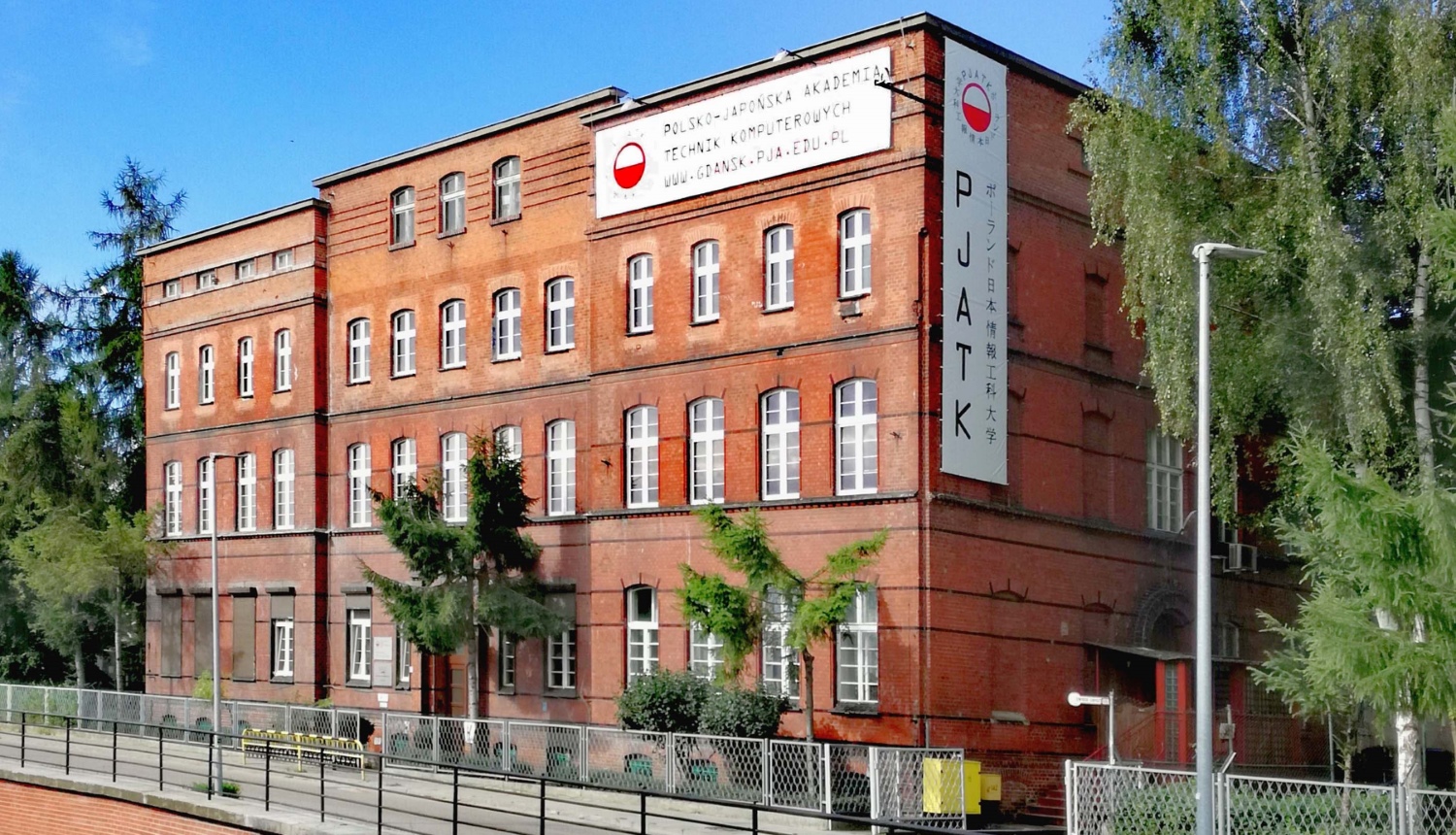
Diploma studios
Second-degree graduates are fully prepared to undertake independent, individual, creative activities and tasks, as well as to participate in research and design teams. They are distinguished by their artistic consciousness and ability to seek original solutions in widely understood design activities, also when taking a leading role in the implementation of team tasks. They are also capable of independent professional-artistic work (independent business). Based on the intellectual and creative tools obtained, with high specialized qualifications, they skillfully plan their own careers. They are prepared to undertake further education at doctoral schools in Poland and abroad, as well as lifelong learning and development, depending on the dynamics of the labor market.
This course introduces students to the fascinating world of real-time graphics technology, teaching them how to create and prepare this type of content. It builds a solid foundation for working with a game engine, which will enable you to create interactive experiences in practice. The course provides excellent preparation for a degree in 3D graphics, offering skills that will open doors for graduates to future-oriented projects in this rapidly growing field (e.g., VR). It is the ideal choice for those who want to gain a solid foundation in the creation of interactive real-time 3D graphics.
Krzysztof Kalinowski, Ph.D., Eng.
An interdisciplinary artist and researcher exploring the spaces between art, technology, and the ontology of the image. His work focuses on three-dimensional hybrid fractals, generative visual structures, and immersive digital worlds. By combining his engineering and artistic expertise, he creates works that redefine the boundaries of perception and the viewer’s interaction with the image. As a lecturer and researcher affiliated with the Polish-Japanese Academy of Computer Technology and the Academy of Fine Arts in Warsaw, Kalinowski shares his knowledge, guiding students through the topics of generative art, interactive design, and immersive XR environments. He has participated in numerous exhibitions, festivals, and conferences, presenting his work both in Poland and internationally.
Adrianna Wróbel, M.Sc. (Eng.)
Adrianna Wróbel is an instructor specializing in 3D graphics and real-time technologies. In her work, she primarily uses the Unreal Engine to create interactive experiences, visualizations, and 3D environments. She teaches courses in 3D modeling, environment design, and real-time technologies, preparing students for careers in the gaming, visualization, and interactive media industries. Thanks to his background in architecture, he combines a technical approach to design with an eye for aesthetics and a conscious approach to shaping digital spaces.
The Multimedia and Digital Graphics Studio is a space for people interested in contemporary forms of artistic expression using images, sound, and new media. Within the studio, students can combine various audiovisual genres and techniques—from graphic design, through photography and moving images, to immersive and interactive projects, as well as works that go beyond two-dimensional forms. I encourage you to experiment with media, explore your own artistic language, and freely cross the boundaries between disciplines. The studio does not impose a narrow specialization but supports the development of individual interests and projects, regardless of the chosen medium. The studio is a place open to bold ideas, experimentation, and individual paths of creative development, and graduation projects can take various forms, corresponding to the nature of the work being created.
Dr. Filip Sendal
Artist, graphic designer, Doctor of Fine Arts, lecturer at the Faculty of New Media Arts at the Polish-Japanese Academy of Information Technology in Gdańsk. He earned his doctorate at the Polish-Japanese Academy of Information Technology in Warsaw. He combines artistic, academic, and design practice. Over the years, as a graphic designer, he has created visual and marketing solutions for various sectors, including HVAC and FMCG. He has collaborated with the Alfa shopping malls in Olsztyn and Białystok, the clothing brand Diverse, and Ultima Displays, a leader in the exhibition market. In his creative work, he employs digital image processing, treating it as a tool for experimentation, transformation, and the construction of meaning. He creates graphic series inspired by nature, the human body, memory, and the human condition.
The Visual Communication Thesis Studio is a space where design becomes a way of telling stories, interpreting, and building relationships with the audience. It is a place for people who want to consciously use imagery, typography, color, and form to create meaningful messages. In the studio, students can work on projects in the fields of visual identity, poster design, publishing, digital design, illustration, visual information, and experimental forms of communication. The focus is on finding one’s own design language, boldly experimenting with form, and breaking away from conventional ways of thinking. The studio remains open to diverse creative approaches and individual paths of development, supporting projects that reflect the designer’s interests and personality.
Dr. Mariusz Sładczyk
He was born in 1958 in Chojnice. A graphic designer, artist, and educator working in the fields of graphic design and new media. He is a graduate of the State High School of Fine Arts in Bydgoszcz and the State Higher School of Fine Arts in Gdańsk, where he received his diploma in 1984 under the supervision of Prof. Marek Freudenreich. From 1990 to 2000, he worked at his alma mater as an assistant to Prof. Tomasz Bogusławski, and subsequently headed the Computer Graphics Studio. In 1999, he earned a Ph.D. in Fine Arts. From 2000 to 2012, he taught graphic design at Bilkent University in Ankara. Since 2013, he has been affiliated with the Polish-Japanese Academy of Computer Technology in Gdańsk, where he serves as a faculty member and dean of the Faculty of New Media Arts. At the same time, he pursues design and artistic projects, including digital graphics, photography, and drawing. His works have been featured in exhibitions in Poland and abroad, including in New York, Georgia, and Turkey.
The course focuses on activities related to illustration and graphic design, supporting the development of students’ individual creative styles. During classes, I place particular emphasis on creativity, independence, and the search for original design solutions. The studio produces final projects that include, among other things, art books, illustrated books, publications, games, cards, posters, and postcards. I encourage students to experiment with form and take on ambitious creative challenges. This is a space for those who want to develop their skills and discover new possibilities for illustration as a means of visual communication.
Dr. Antonina Buszewicz-Hryniewicz
She is originally from Warsaw, where she graduated with honors from the Department of Graphic Arts at the Academy of Fine Arts. She has been living in the Tri-City for over a dozen years, where she pursues her creative work as a painter. In addition to her painting practice, she is a lecturer at PJATK (Department of New Media Art, Gdańsk branch) and at the Academy of Fine Arts in Gdańsk (Department of Graphic Arts). She leads an illustration studio for both bachelor’s and master’s degree programs. She has participated in dozens of solo and group exhibitions. In 2024, after several years of work, she earned her Ph.D.
I view the process of developing a diploma project as a three-story structure: The first semester—the initial, foundational level of exploration—is a time of open experimentation concerning the meaning and content of artistic expression—the design and the language used—and the mode of expression. The second semester involves continued research—a transition from the phase of free, experimental exploration to the creation of prototypes of visual art objects derived from selected ideas, while continuing to refine the expressive dimensions of all elements of the emerging whole. Consideration should be given to the methods of presenting the project and disseminating it. The third semester—drawing on accumulated experience—sees the student working toward a diploma shape the final, mature form of the chosen creative idea, as well as the concept for its presentation and dissemination.
The topic of a thesis may relate to any aspect of a person’s creative interests. The means of expression may include any methods and techniques that adequately convey the issues addressed.
Full Professor Andrzej Śramkiewicz
He was born in 1951. From 1969 to 1974, he studied at the State Higher School of Fine Arts in Gdańsk (now the Academy of Fine Arts) in the Department of Painting. In 1974, he received his diploma from the studio of Prof. Władysław Jackiewicz and, from that year until 2019, worked as a faculty member at that institution. In 1999, he was awarded the title of professor. Since 2010, he has been employed at the Polish-Japanese Academy of Information Technology in Gdańsk. For over 50 years, he has been painting and drawing, and has exhibited his works in Poland and abroad.
Our perceived reality today is increasingly multimedia-driven and, at the same time, increasingly rich in a wide variety of processing tools—and we are, after all, children of our time. I myself enthusiastically employ many methods of image creation, drawing on photography from various sources, the possibilities offered by computer software, and the effect of manual work—which remains constantly close to my heart. All of this, I believe, broadens the possibilities for personal interpretation of what the eyes perceive and what goes on in the mind. Experience in drawing, painting, and printmaking remains an indispensable foundation of my artistic practice. For it is here that the source of skills related to understanding composition, structure, harmony, and expression lies; it is here that we best recognize our own temperament, aptitudes, and dreams; and it is from here that we come closest to finding our own visual language. And only then does the artistic adventure become real and exciting.
Prof. Roman Gajewski, Ph.D.
Born on February 23, 1954, in Sopot. Painter, printmaker, graphic designer, art gallery founder, and initiator of numerous artistic events; he is also active as a writer on art theory and author of monographs on other artists. A graduate of the Academy of Fine Arts in Gdańsk (formerly the State Higher School of Fine Arts); he received his diploma in painting in 1979 in the studio of Prof. Władysław Jackiewicz. He has remained affiliated with the Academy ever since. In 2010, he was appointed professor by the President of the Republic of Poland. From 2017 to 2020, he served as head of the Department of Drawing at the Faculty of Painting. From 2007 to 2020, he was also a lecturer at the Sopot University of Applied Sciences (now the Sopot Academy of Applied Sciences), where he helped develop the framework for a program in the visual arts. Since 2023, he has been affiliated exclusively with the Polish-Japanese Academy of Computer Technology at the Faculty of New Media Arts.
He has participated in over 170 solo and group exhibitions in Poland and abroad. His works have been exhibited or are held in collections in Poland, as well as in Austria, the Czech Republic, Denmark, France, Spain, Israel, Canada, Lithuania, Malaysia, Germany, South Africa, Romania, Turkey, Ukraine, the United States, the United Kingdom, and Italy.