UMIKON – The Amazing Worlds of Studio Ghibli


A year ago, we left the PJAIT AI Summit with the feeling that we more or less understood what artificial intelligence is and what we’re actually dealing with. There was no shortage of questions or debates, but above all, we were driven by curiosity and an eager anticipation of what the coming year would bring. During the PJAIT AI Summit 2026, held on September 16 at our university, that curiosity was joined by a great deal more uncertainty. Not because AI had ceased to impress us with its capabilities. On the contrary, it has developed so rapidly that it’s becoming increasingly difficult to predict where the boundaries between its tasks and the role of humans will lie.
At the end of our coverage of the previous AI Summit PJAIT 2025, we announced the next edition of this conference for this year, wondering whether it might take place in a different reality. This year’s presentations showed just how accurate that observation was. Questions about what AI is capable of were increasingly giving way to questions about whether we are keeping pace with its capabilities and whether we understand the consequences of using them.
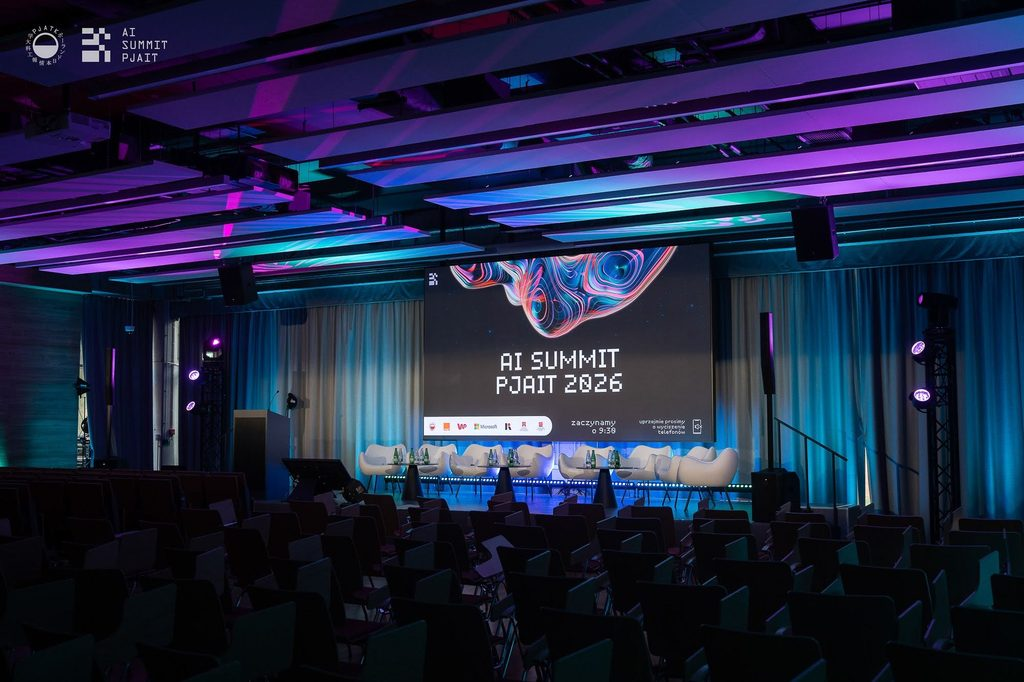
We organized the third edition of the PJAIT AI Summit 2026 in collaboration with our flagship partners: Orange Polska, Wirtualna Polska, and Microsoft. Once again, we welcomed representatives from academia, business, the arts, and the world of new technologies, as well as students. The hall was packed all day long, and the discussions could also be followed online from morning to evening. It’s impossible to cover all the topics discussed in a single report, but it’s worth revisiting those that best illustrated just how much has changed over the past year.
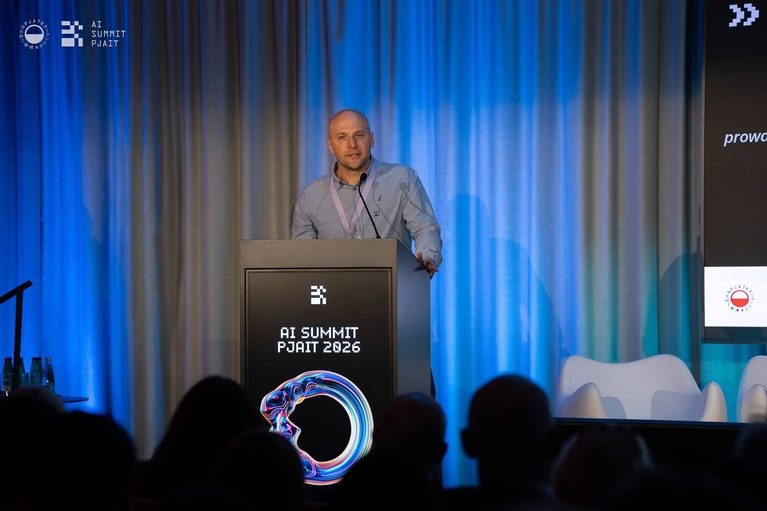
A good introduction to the day was an anecdote shared by the rector of PJATK, Dr. Jerzy Paweł Nowacki. During the previous edition, he had used an excerpt from Stanisław Lem’s prose to illustrate the difference between human capabilities and those of AI. This time, he chose not to make a similar comparison, as he considered the generated text to be just as good. This, of course, does not settle the debate over the value of literature, but it does well illustrate the pace at which our expectations of technology are changing.
The rector also spoke about the need for a new social contract between employers and employees, and expressed his hope that AI would remain a tool to assist humans, rather than their mentor.
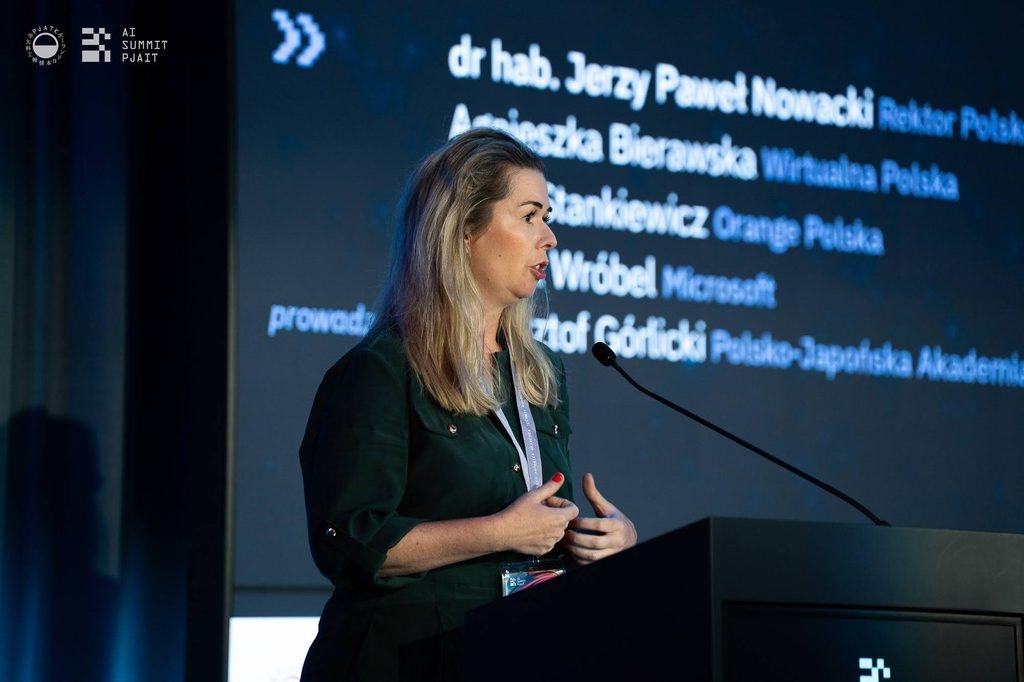
Agnieszka Bierawska of Wirtualna Polska pointed out that simply asking about the impact of artificial intelligence on the labor market is no longer enough. What matters more is whether organizations are able to adapt quickly enough.
Paweł Wróbel of Microsoft described a similar shift in perspective. According to him, companies are asking less and less about the capabilities of specific models and more and more about secure implementation and tangible value. However, there is still a long way to go between the everyday use of AI and the readiness to apply it responsibly in the workplace.
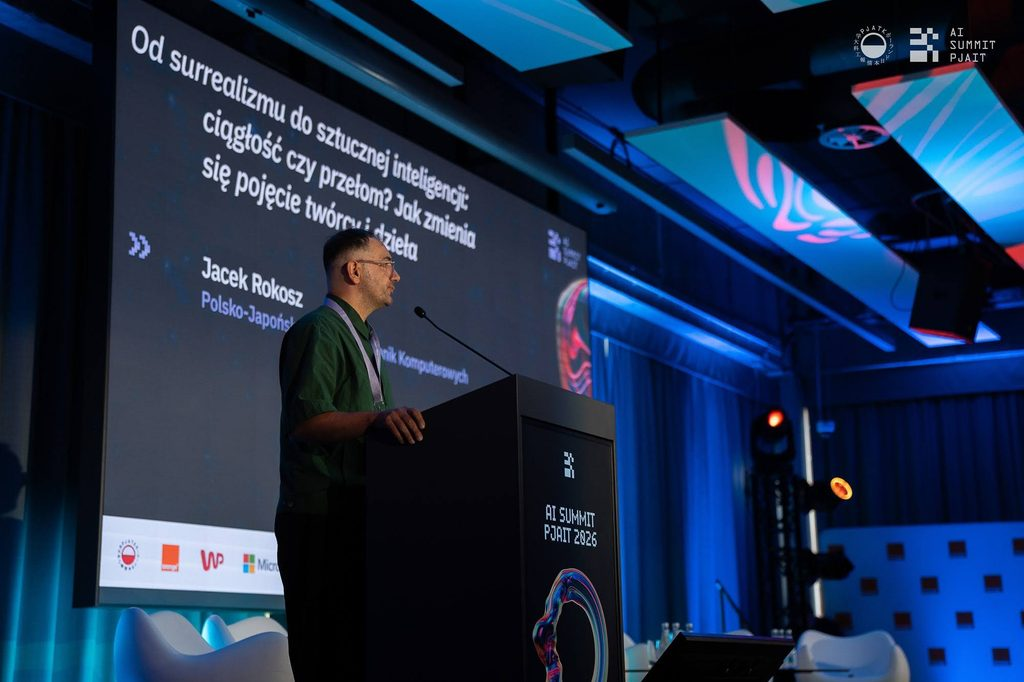
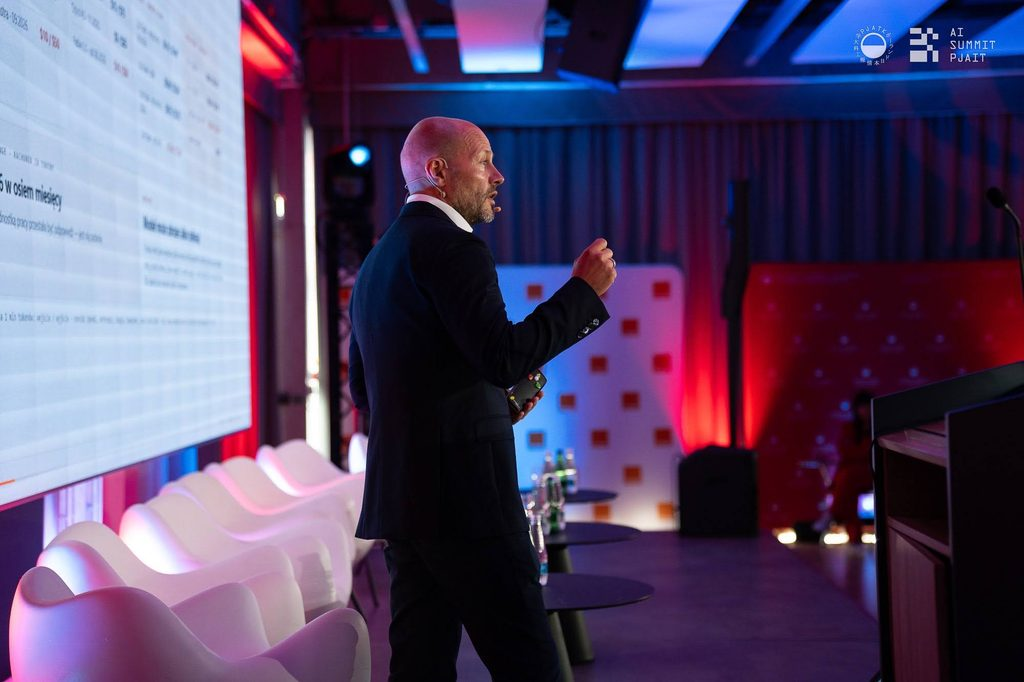
Jacek Rokosz from PJATK suggested looking at artificial intelligence through the lens of the history of animation. He pointed out that automation did not first appear in animation with generative models. Over time, various tools have shortened tedious stages of production, changed the division of labor, and influenced the final appearance of films.
One example was the use of xerographic technology in the production of “101 Dalmatians.” As the speaker demonstrated, streamlining the process of copying drawings not only saved labor but also resulted in a different quality of line work. In his view, AI fits into this history as the next stage in the development of tools, while the need to tell stories remains the domain of humans.
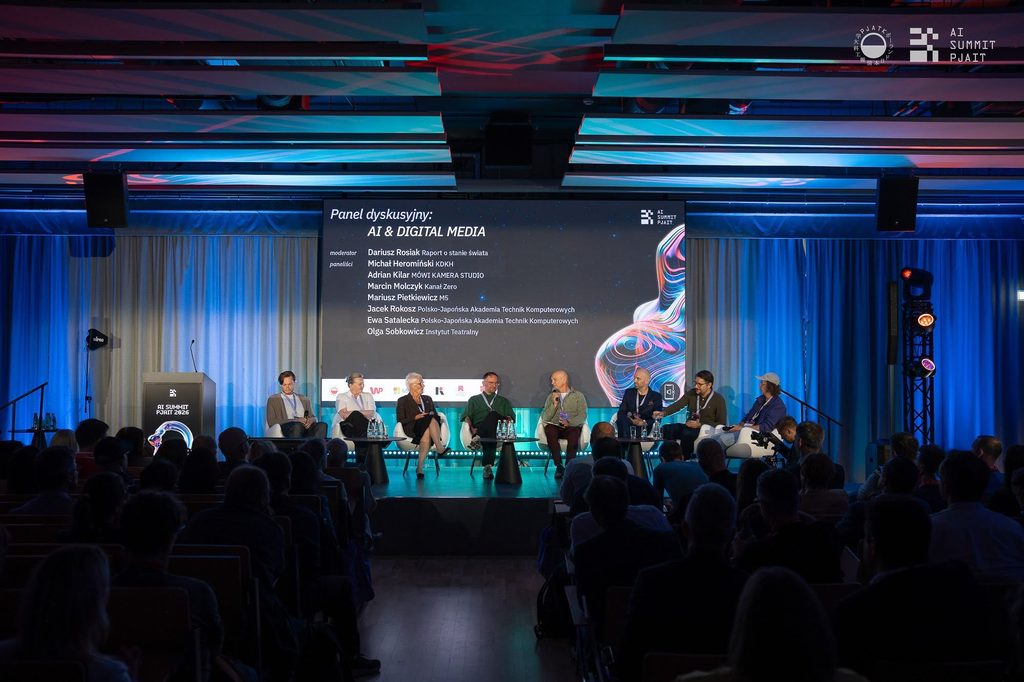
However, the “AI & Digital Media” panel showed that bringing ideas to life more quickly does not solve all of a creator’s problems. Ewa Satalecka from PJATK pointed out that art is not a competition in efficiency, and the widespread use of similar tools can lead to uniformity in the results. After all, the ease of generating an image does not necessarily mean that something unique has been created.
Alongside examples of AI’s use in creative work, questions arose about copyright and responsibility for shared materials. Olga Sobkowicz spoke about the Theater Institute’s decision to discontinue its collaboration with the model when it was not possible to guarantee the protection of the rights of the archive’s creators. This was a concrete example of a situation in which the availability of technology does not necessarily determine the legitimacy of its use.
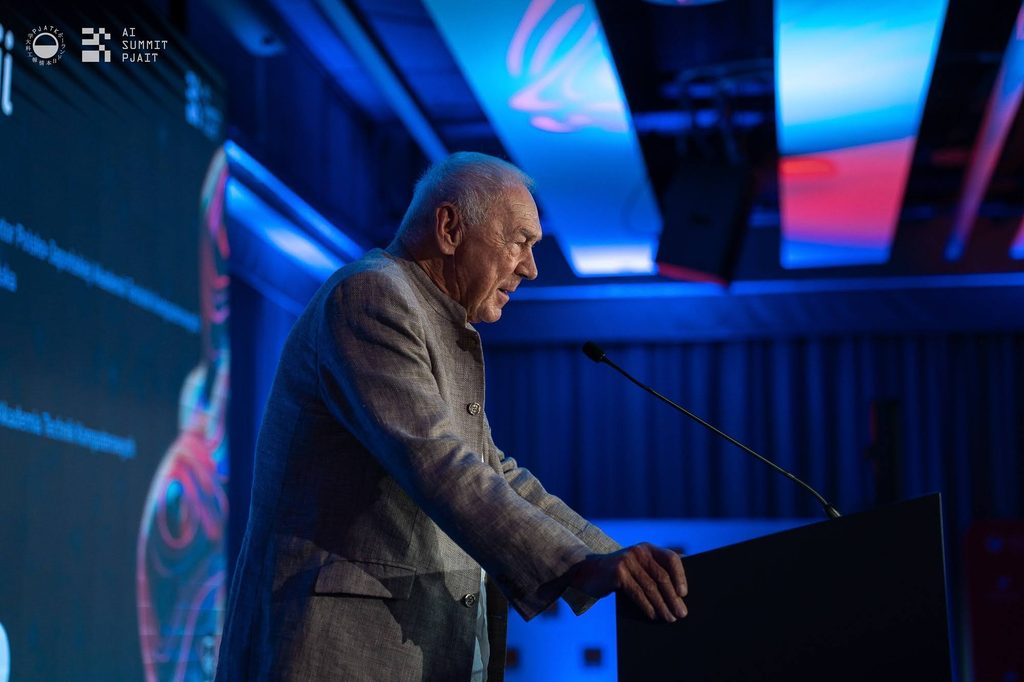
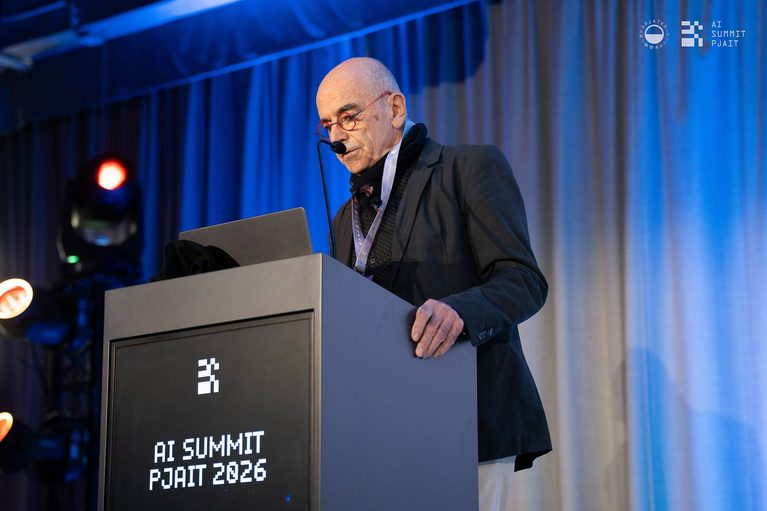
Sławomir Idziak offered a different perspective in his presentation, “AI from a Retiree’s Point of View.” He spoke about the experience of a generation that has moved from the analog world through the digital world to artificial intelligence. He did not view AI merely as just another simple tool, but as a partner whose presence is changing the way we work and think.
His proposals regarding education were particularly important for the academic community. Idziak advocated combining technical skills with the humanities, fostering teamwork, and creating spaces for experimentation—such as hackathons, camps, and interdisciplinary projects. He also encouraged universities and companies to develop their own approaches to working with AI, rather than settling for the same set of tools used by everyone.
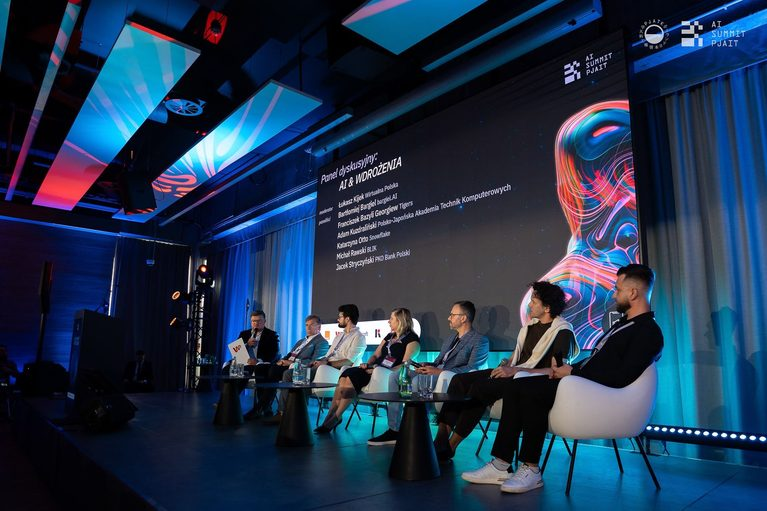
In the “AI & Implementations” panel, moderated by Łukasz Kijek, the discussion quickly shifted from the technology’s capabilities to employees’ reactions. Adam Kuzdraliński from PJATK emphasized that resistance may stem from a feeling that the knowledge and experience of specialists are being disregarded. Implementation should therefore take place in collaboration with employees, not over their heads.
Katarzyna Otto of Snowflake emphasized the need to identify the root causes of these concerns. A lack of skills is one thing; fear of losing one’s job is quite another. Michał Rawski from BLIK, on the other hand, emphasized the importance of employees who are the first to embrace new solutions and can show others that these solutions actually help with everyday tasks.
The discussion kept returning to an approach based on small, measurable steps. First, identify a specific problem, prepare the data and the team; then conduct a test and evaluate the results. This is less spectacular than announcing a grand AI strategy, but it offers the chance for employees to see the benefits in their own work.
Artur Stankiewicz of Orange Polska highlighted the implementation from a perspective that is often overlooked in discussions about AI: cost. Artificial intelligence can improve a company’s performance, but it also generates expenses of its own, depending, among other things, on the scale of model usage. That is why it needs not only enthusiasts but also people responsible for controlling costs and assessing profitability.
The speaker cited an instance where a vendor discontinued a model that the team had previously been working with. The practical takeaway was simple: when implementing AI, you need to have a plan for switching technologies. Relying on a single solution for a project can become a problem sooner than the team anticipated.
Among the applications discussed were voicebots in customer service, software development support, and conversational access to data and reports. This last example clearly illustrated the difference between making a tool available and actually using it. Even a more convenient way of working does not guarantee that employees will abandon their existing habits.
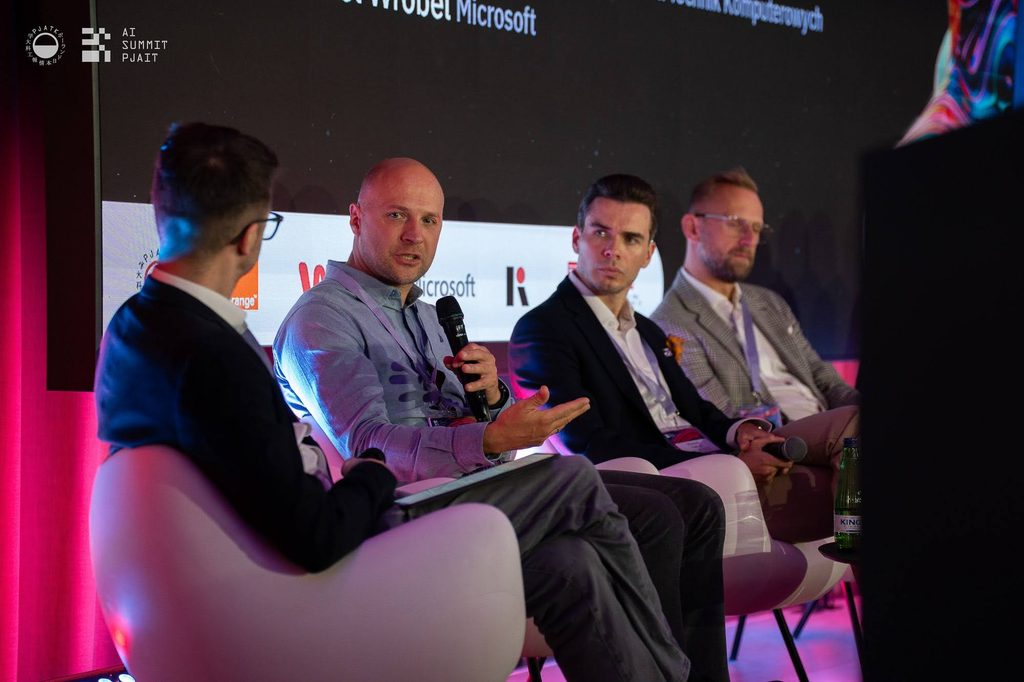
The “AI & Business” panel presented additional examples of applications. Adam Simon from OTOMOTO described the automated generation of ad descriptions based on photos or short videos, noting a 36% reduction in publication time. Wojciech Ogórek from BNP Paribas Bank Polska spoke, among other things, about extracting data from loan documents and supporting software development.
Alongside the benefits, however, the issue of the limits of automation was raised. In banking, even a small percentage of errors can have serious consequences, which is why the solution’s high effectiveness alone does not settle the debate over its security. Paweł Wróbel, for his part, emphasized that implementing AI is an organizational change, not merely a technological project.
A useful addition to these discussions was a comment by Maciej Tąkiel of PJATK on how to critically read industry reports. It’s worth asking who commissioned the study and what the data actually reveals. In a world full of promises about AI, experiences from specific implementations take on particular significance.
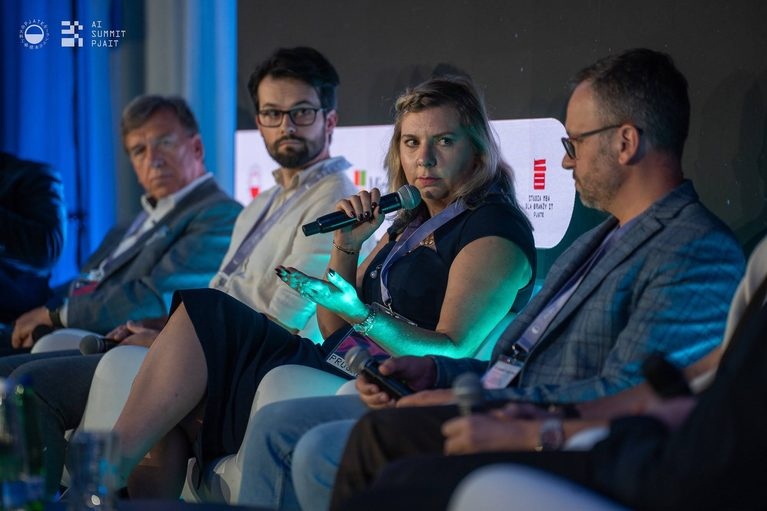
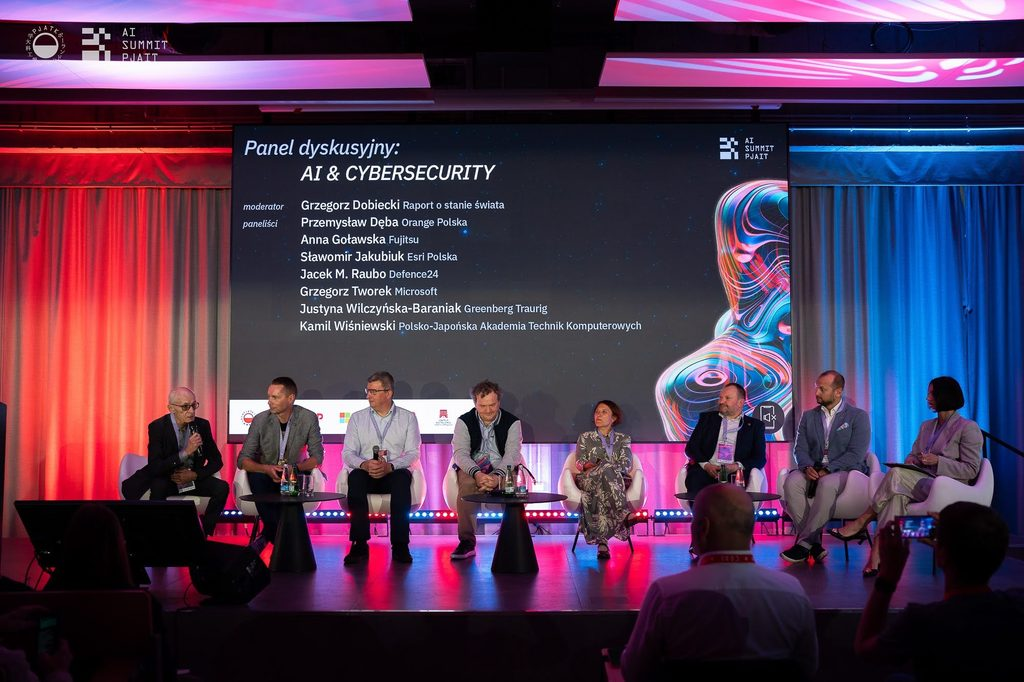
During the “AI & Cybersecurity” panel, moderated by Grzegorz Dobiecki, the idea kept coming up that concerns shouldn’t be limited to the technology itself. Equally important are the intentions of the people who develop and use it, as well as the pressure under which new products reach users. Fear, however, is no substitute for risk management.
The discussion focused on increasingly sophisticated attacks targeting employees and the use of AI outside an organization’s control, referred to as “shadow AI.” In this conversation, humans emerged both as a potential weak link and as individuals capable of identifying threats and responding to them appropriately. Therefore, education and team collaboration remained just as important as technical solutions.
The discussion also covered military applications, dependence on technology suppliers, and responsibility for decisions made with the involvement of automated systems. There was a strong call to take legal and security issues into account from the very beginning of a project. Waiting until the finished solution is ready to launch to address these issues may mean having to go back several steps.
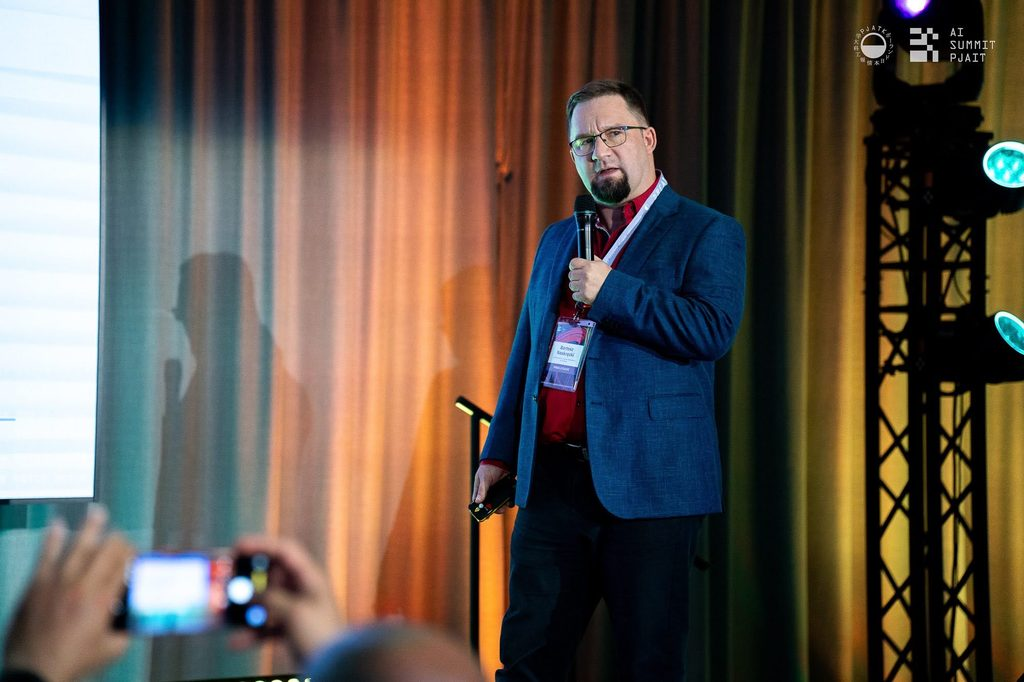
Bartosz Naskręcki chose a format that clearly set his talk apart from previous presentations. Instead of yet another set of implementation examples, he presented a speculative story about an AI system named Daniel that is gradually taking over the work of mathematicians. The provocative title, “We No Longer Need Mathematicians,” was an invitation to reflect on such a scenario, not a declaration of the end of the profession.
In this story, the machine generated evidence, wrote and reviewed publications, while people understood less and less of the results of its work. The fictional world became dependent on answers it could no longer verify on its own. Even solving a major mathematical problem did not, at that time, provide certainty that everything was actually correct.
So it wasn’t just about whether AI could compute something faster. The story raised the question of the cost of sacrificing understanding and what would happen to knowledge once there were no longer people capable of verifying it. In the context of our university, it’s hard to imagine a more stark reminder of why the result itself should not replace the process of arriving at it.
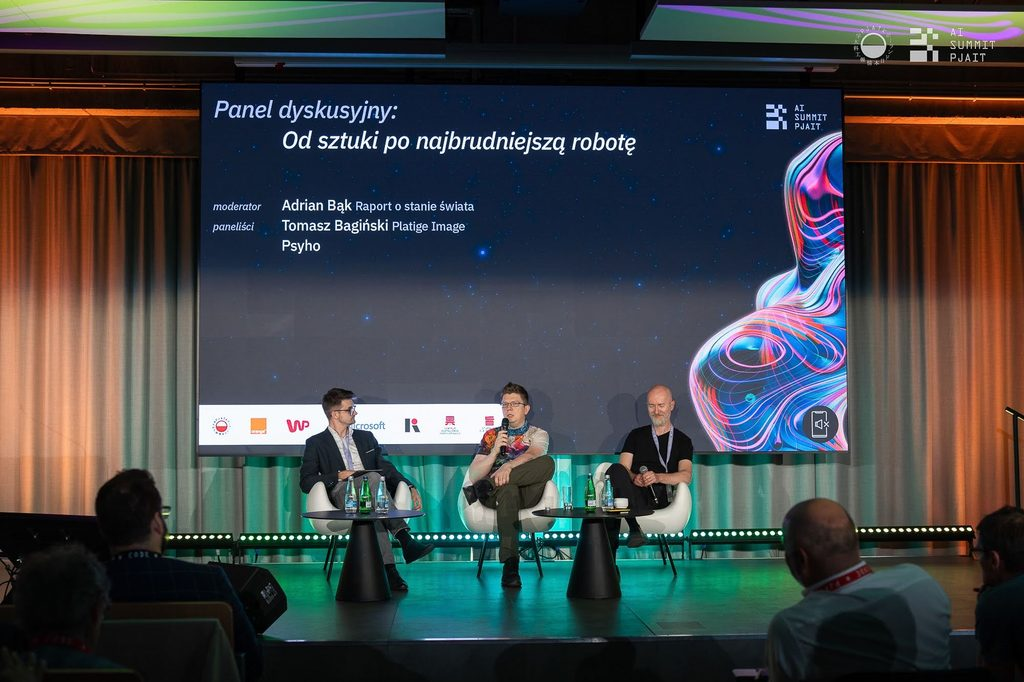
In a conversation with Tomasz Bagiński and a programmer known as Psyho, the distinction between streamlining work and relinquishing control over its creative aspect came up again. Bagiński emphasized the importance of authorship and the audience’s relationship with the person behind the work. For him, the ability to generate thousands of images is not the same as creating one’s own artistic expression.
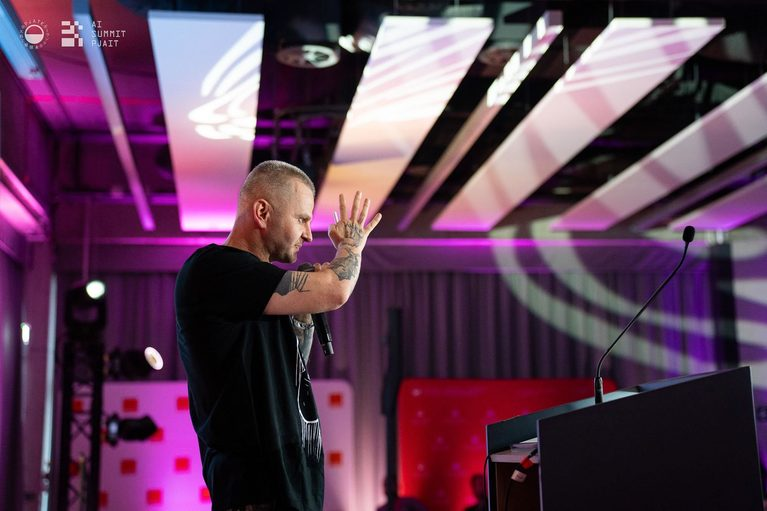
Psyho pointed out a similar problem in competitive programming. Assigning successive tasks to AI can change not only the pace of problem-solving but also the nature of the activity itself and human involvement in creative decision-making. In both fields, therefore, the question arose: which stages do we want to speed up, and which ones give our work meaning?
However, the conversation wasn't limited to concerns. Psyho highlighted the enormous potential for self-directed learning, prototyping, and testing ideas. Bagiński, on the other hand—including during the Q&A session that followed—clearly distinguished between what AI does faster and what, in his opinion, it does better. This distinction turned out to be one of the most important points of the entire day.
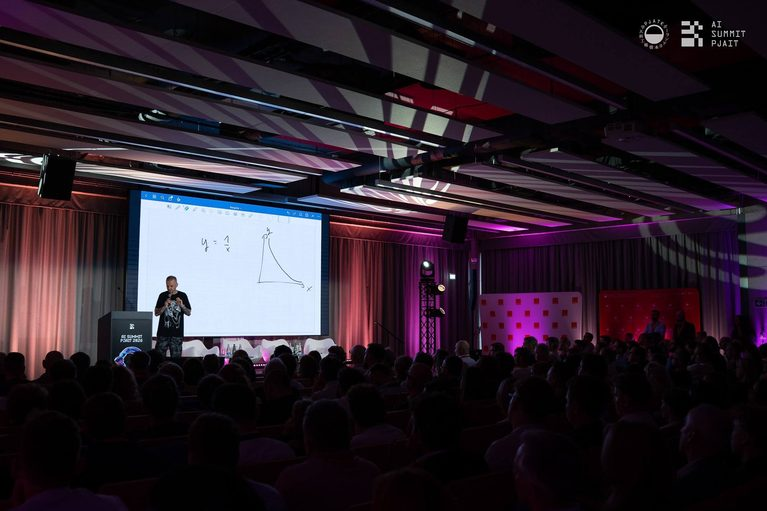
In his lecture “White Holes,” Andrzej Dragan took the audience on a journey into physics, spacetime, and the process of scientific discovery. However, this journey ultimately led back to the conference’s main theme. Using examples related to the theory of relativity, he demonstrated the importance of recognizing analogies and connecting seemingly unrelated phenomena.
In his argument, pattern recognition was not the opposite of intelligence, but one of its foundations. This perspective challenges the convenient assumption that models merely match known elements, whereas humans create in an entirely different way. Dragan also highlighted the role of experience and observation, which provide science with new questions. The conversation about AI thus became a conversation about how we understand our own thinking.
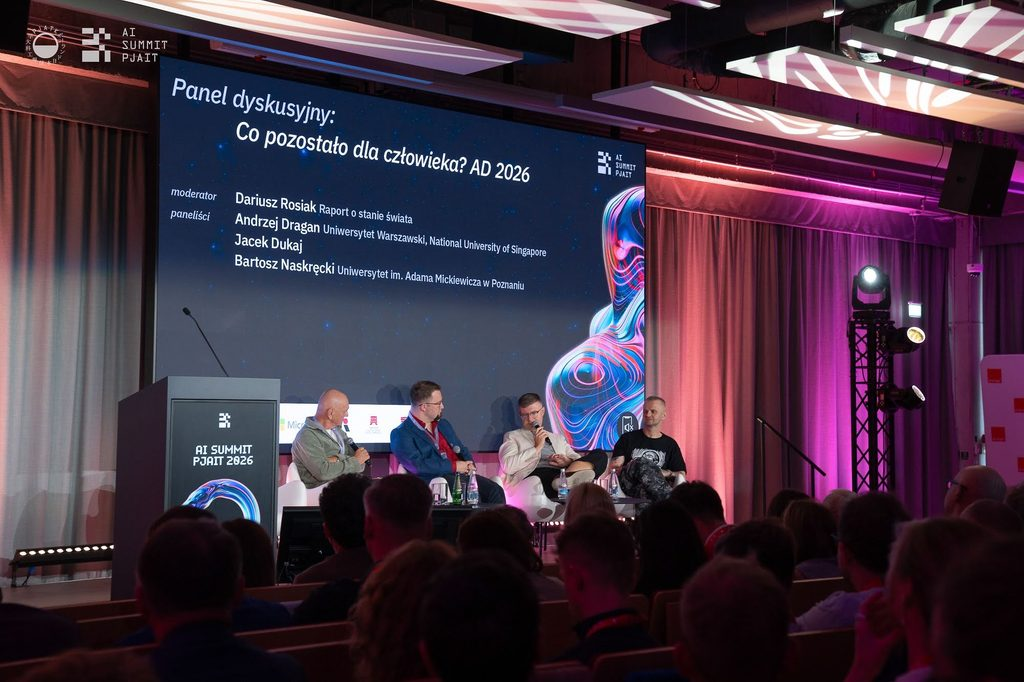
Last year, one of the highlights of the conference was the discussion between Jacek Dukaj and Andrzej Dragan. This time, Bartosz Naskręcki joined the conversation moderated by Dariusz Rosiak. The questions addressed not only the capabilities of models, but also human agency, the authorship of discoveries, and the significance of understanding.
Dragan presented a forecast in which machines would take over a significant portion of mathematical work. Dukaj reflected on how our growing understanding of the mechanisms of our thinking affects the concept of individual creativity. The discussion also raised concerns about the concentration of power over technology and about societies’ ability to make informed decisions regarding its use.
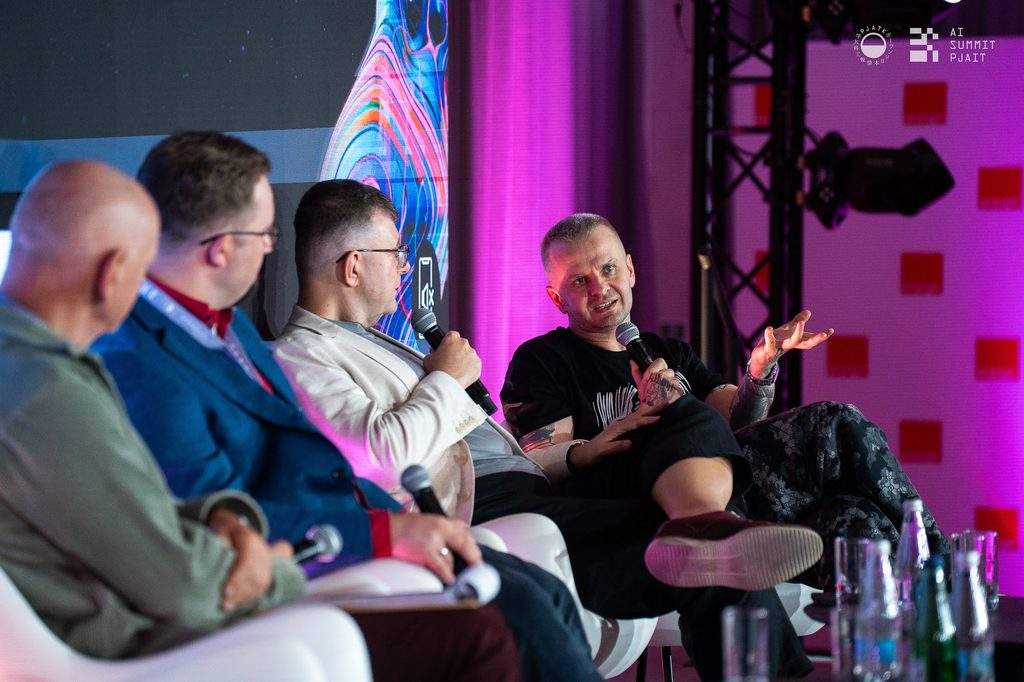
These were not ready-made answers or an agreed-upon roadmap for the future. Instead, the clash of different perspectives clearly illustrated why uncertainty kept resurfacing that day. It is becoming increasingly difficult to identify a competence whose exclusive ownership a person could simply take for granted.
During the Q&A session, which was joined by Bagiński and Psyho, an important distinction emerged. Dukaj emphasized the value of the creative process itself—the personal experience, the satisfaction, and the need for expression. Even if a machine can produce a similar result, it does not take away the reason why a person wants to create something on their own.
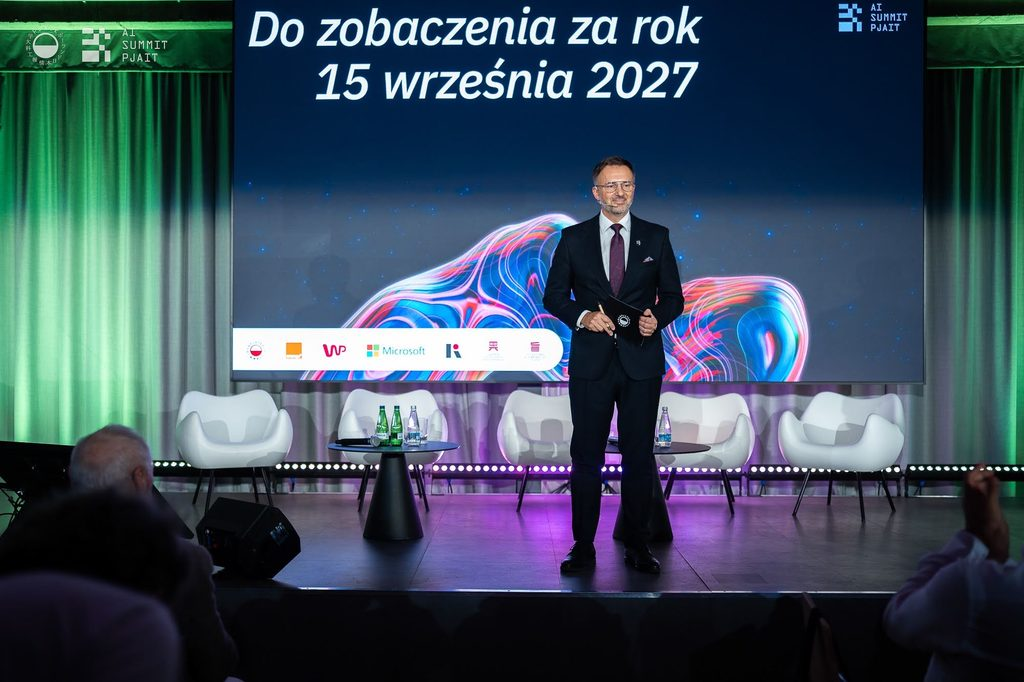
The conference summary did not offer a single solution for the coming years. Agnieszka Bierawska spoke about the difficulties of predicting the future and the importance of informed decisions, while Dariusz Rosiak encouraged rational reflection and a sense of detachment from fear-mongering messages. The value of human relationships—which even the most advanced tools cannot replace—was also emphasized repeatedly.
A year ago, we left the PJAIT AI Summit with a clear picture of the technology and a sense of curiosity about what lay ahead. This year, we’ve learned just how quickly that picture needs to be updated. We still see enormous potential, but we’re also more acutely aware of the scale of the questions we don’t have answers to.
That is precisely why we need gatherings like this one, bringing together scientists, innovators, entrepreneurs, and students. They allow us to weigh promises against experience, forecasts against doubts, and technology against its social consequences. This year’s PJAIT AI Summit did not bring the conversation about the future of artificial intelligence to a close. It demonstrated why we must continue this conversation, even if some of today’s questions will sound completely different a year from now.